"You'll never get ahead if you don't take care of what you have." - Doris Waddell, RIP

The late Ralph E. Williams with "Heidi" - morris mn

The late Ralph E. Williams with "Heidi" - morris mn
Click on the image to read Williams family reflections w/ emphasis on UMM.

Friday, July 18, 2014

Boomers stunned as retirement beckons

"Tony Cruze is here to stay, he will never die."
- Tony Cruze in college doing his faux vain takeoff on the rock 'n' roll lyrics "Rock 'n' roll is here to stay, it will never die."
Of this, memories are made.
 
My generation of the boomers is easing out of the work phase of life and into the unknowns of retirement. Tomorrow (Saturday, July 19) has a fete scheduled in Willmar for Tony Cruze. Tony is part of the large and very vibrant Cruze family. Those kids had countless friends around Morris. Their home base was South Street. I have previously joked that "The South Street Kids" would be a nice movie title. I'm not sure fiction would be any more engaging than the truth.
So substantial were the boomers with our numbers, our elders really couldn't keep up with us or adequately watch us. Today we look back in a vein of "the good old days." We tend to remember the good things more than the bad.
There was bullying and some real dangers as we sought our excitement. Parents just seemed to assume the risk was out there, and didn't seek to eliminate it. As kids we were told to watch carefully as we got out of a school bus. Today the onus is on the motorists. Today as I make my rounds, I won't go near a school bus, so as not to risk committing some sort of infraction. Bus drivers are at the ready to call in this stuff. I have heard that at least one Morris driver, apparently on the bubble for getting fired, fancies herself a quasi police officer.
We have enough trouble with our regular police who get consumed with harassing good people with trivial citations. Don't even try to drive a couple blocks without putting on your seat belt.
Tony Cruze is a law enforcement guy. He is a law enforcement "good guy" who has done serious work with a purpose. He's commander of the CVI Drug Task Force, part of the Kandiyohi County Sheriff's Office. He's a 1973 graduate of Morris High School, as is yours truly. So is his brother Art. Art "sells air" - in other words he's a radio ad salesperson. Both ply their professional skills in Willmar.
Art takes care of his matriarch mother Leona in Paynesville. Leona was a Rudnicki.
Tony Cruze was a heavyweight wrestler in high school under the venerable Al Hendrickson. He had the kind of physique you'd expect for that. Our "class prophecy" had Tony "getting mistaken for the Hamm's Bear and shipped to the Como Zoo."
Scott Beseman was also available to wrestle heavyweight for Motown. Theater definitely became Scott's thing when he left high school. He headed west to Idaho. Like me, Scott did not always find high school to be the most supportive environment.
Our '73 class had its 40th reunion last summer. I didn't attend, partly because I didn't want to get into a photo that would appear in the Morris newspaper. Also, we had to have our dog, nearly 17 years old, put down a few days earlier. I was downcast.
I had helped organize the 30-year reunion in 2003 and got discouraged when a class member, initials V.S., decided not to come simply because we hadn't been able to book the Old No. 1. OK, do it without me then.
Appetizers will be served at 6 p.m. on July 19 for the Cruze fete. The program is set for 7 p.m. All of this is at an establishment called "The Oaks." Tony's family is hosting.
I will forever be bitter because I had to miss graduation receptions for Tony's children due to my commitment to cover the Chokio-Alberta graduation, always on the Sunday of Memorial Day weekend. Today the Morris paper doesn't even cover the C-A graduation. Today the Morris paper just wants to disseminate Alexandria advertising. This must be "Alice Through the Looking Glass" or whatever.
Those Alex businesses get enough of our dollars even if all that advertising garbage wasn't send around.
The Cruze family also includes Greg of Cold Spring who is kindred in spirit with me.
When I was beginning college the boomer youth gathered at a basement dive called "The Buccaneer" in Willmar. People my age can remember notorious "watering holes" like that. The drinking age had been lowered. We were eager to behave like "adults." How wayward we were. Or, how wayward our society was.
Young people deserved to drink because we had been drafted for the Viet Nam war, or so the reasoning went. We are so human an animal. In St. Cloud the boomer youth congregated and took in disco music at a place called "Trader and Trapper," which later became a Goodwill.
The Class of 1973 is filtering into retirement. Maybe we're staggering. I left my full-time employment prematurely. I suppose that's another reason I didn't attend the reunion.
Steve Poppe and Craig Murphy were lighweight wrestlers under coach Al in the early '70s. We sympathize with Steve on the recent death of his father-in-law. Steve and Craig are 1973 MHS grads. But the real wrestling star from our class was Randy Thraen. I'm happy for his success although I felt his weight-loss efforts were a bit too much. I have long had reservations about this aspect of the sport. I saw Randy at the recent Prairie Pioneer Days. We fondly remember the late Chuck Kopel who was a top-notch wrestler with our class.
Edith Martin was a class speaker for our graduation. The ebullient "Edie" is a daughter of the late iconic Willie ("love ya") and Rachel. She implored us from the podium to "not be a Milquetoast." None of the Cruze boys would ever be mistaken for a Milquetoast. They too are most ebullient.
Now Tony is stepping out of his professional life. Into what? Are we really wiser than when we stepped out of high school? Or just more worn out?
We were in high school so long ago, the high school auditorium wasn't even built yet. Grades 10-12 only were at the high school building. You might say the boomers swarmed.
People my age are part of what's been termed "baby boom cohort No. 2." One of our traits is cynicism. Some very bad things were happening with our nation as we came of age. Watergate was ripe in our senior high school year. Watergate was not only a bad thing, it was stupid.
The years 1973-83 were a particularly bad time for our economy. We expected the worst.
A seed of optimism was planted in us, destined to eventually sprout and bloom. It was only a seed in 1973.
Imagine living life with none of the electronic gadgets of today, none of the connectivity. It seems analogous to cave paintings, right? Yet we got by day-to-day with typical human grit. We had tons of energy spending idle time at Lakeview Lanes and punching up Paul McCartney and Wings music on the juke box ("Jet," "Band on the Run" etc.) We went to "The Back Door" at Sunwood Inn, the establishment now known as Prairie Inn. The Back Door was where we reveled in being of legal drinking age. There was live music. We listened to Doobie Brothers songs until we practically went deaf. Air hockey was a new novelty.
We were generally svelte in our physique. If you were "fat" you stood out and might bring whispers, whereas today no one would think anything of it.
I'm not fully nostalgic as I write this. It's rather the opposite. Nevertheless, we look back on our developmental years with a constructive eye, realizing that if we did engage in foolishness, it was somehow part of our nature. It's what makes us human.
Society seemed eager to have us joining the ranks of adults who can drink alcohol. A few short years later we'd get the "just say no!" campaign of Ronald and Nancy Reagan. Remember that PSA that showed the eggs frying? "This is your brain on drugs." I have read that many people of a certain age are averse to fried eggs because of this.
We grew into "yuppies." Suddenly we threw off the yoke of left wing thinking that defined us through the '70s. That yoke served us well when we had certain social welfare causes. Then we discovered money. We discovered money isn't so bad after all. Hell, we discovered it was like honey!
Eventually we became tea partiers. John Stewart has described the tea party as "a going out of business sale for the boomer generation."
So here we are, getting feted at retirement gatherings like Tony's. And what brave new world might be lying ahead of us? Shuffleboard? That's the old stereotype. What have we gained from all our life's ventures? I guess I'll quote the Alex Karras character from "Blazing Saddles," who in a moment of resignation gave us the line: "Mongo just pawn in game of life." Such words ring just as true as "don't be a Milquetoast."
At any rate, congratulations to Tony on his full life and career. Law enforcement is not always an honorable profession, as we have seen here in Morris with the pathetic and wayward attempt to convict our high school principal - an episode that denied our high school the services of its principal for most of the school year. Again: "Alice Through the Looking Glass." Our graduates of the Class of 2014 will be spending the rest of their lives telling friends and family about the calamity of their senior year: having the principal disappear from school grounds due to groundless charges of criminal sexual misconduct. I can't think of anything more sordid.
On the heels of that Keystone Cops episode we have had major buildings get practically wiped out because of an apparent lack of engineering oversight, at the public library and then the Catholic school. The Cruze kids spent a lot of time at that Catholic school. The Cruze kids got me interested in Catholic bingo. I feel a bit kindred with the Catholic faith because of that.
I remember once playing croquet with the Tony Cruze family and hearing a frustrated Tony exhort: "Oh Holy Mother of Croquet be with me!" Us boomers will need such guidance in retirement. Do a Hail Mary.
- Brian Williams - morris mn minnesota - bwilly73@yahoo.com

Thursday, July 17, 2014

Double with bases full = win over NL-Spicer

Morris 4, New London-Spicer 3
Riley Biesterfeld excelled in the clutch again! This time he strode to the plate and really came through in a playoff situation. Morris was facing New London-Spicer in round 2. We're in District 7 North of Division II.
The Morris Legion team made it two wins in a row thanks in large part to that noisy Biesterfeld bat. His bat resonated with a bases-clearing three-run double. This sent NL-Spicer to the ropes in an overall hard-fought contest at Spicer.
Prior to that double, Morris was clinging to a 1-0 lead. The score was 4-0 after six innings. But it wasn't a cakewalk through the seventh. Not hardly, as NL-Spicer rallied for three runs. But the NL-Spicer comeback bid ended there, and Morris could savor its 4-3 win in round 2.
Game 3 for the Motown crew presents itself tonight (Thursday, July 17). Game-time is 6 p.m. as Post 29 will vie with top-seeded Osakis. The top seed gets to host this game. There is a losers bracket so NL-Spicer keeps going.
Morris enters tonight's contest with a 9-5 season record.
We got going with one run in the third vs. NL-S, scored on a throwing error.
Biesterfeld
came to bat in the fifth with the scoreboard showing a 1-0 score. The opportunity was ripe for creating breathing room. Biesterfeld seized that opportunity. His double into the left-center field gap cleared the bases. So, the score is 4-0.
Pitcher Noah Grove was blessed by very good fortune. Not that he wasn't an effective pitcher. But in the seventh there was an oddity that blessed Morris and had to crush the hopes of NL-S. First the NL-S boys scored two runs, then came a drive to deep left field off the bat of Ryan Vraa. Two baserunners were aboard. Surely both would score and this would be a whole new ballgame. Ah, but the ball got stuck under the fence! The umps required that a ground rule double be ruled. The consequence: only one run coming in. The score is 4-3, not 4-4.
Grove bore down to fan the next batter. Game over.
Grove fanned ten batters in his full seven innings. He walked three and gave up six hits. One of the three runs he allowed was unearned.
Morris had a line score of four runs, five hits and two errors, while NL-S posted 3-6-1 numbers.
Grove outdueled Jonny DeGeest who also hurled for the distance. DeGeest was effective, setting down nine Morris batters on strikes. He did walk five. He gave up five hits and four runs (three earned).
On to the offensive story: the Jergenson boys were productive. Bryce went two-for-four including a double, and Brady had a one-for-two line. Grove had a hit and scored two runs. Biesterfeld had that most essential double and three ribbies.
Vraa
led NL-S with his two-for-three line including a double, and he drove in a run. Michael Arnold, Brett Olson and Josh Soine each went one-for-three.
The Jergenson boys are presenting the same problem for the Willmar newspaper as the Holland sisters. It's not enough to refer to one of the Jergensons as "B. Jergenson" in the boxscore. One is "Brady" and the other is "Bryce," and in the case of the Holland sisters we had "Beth" and "Becca." You'll note that not only is the first initial the same, the first two letters of the first names are the same.
The system of using initials (for subsequent references) is common procedure for newspapers. You see, newspapers have limited space as they try to squeeze things in as much as they can. That constraint is solved with the Internet. Sometimes in the Willmar paper you'll see results of an athletic event, like a large wrestling tournament, where the type size is so small, I wonder why they even bother. It's unreasonably small and not just for people who need reading glasses.
The names "Bryce" and "Brady" should just be spelled out in full in all references. It was the same with "Beth" and "Becca." Maybe you just can't tell the players without a program!
  
Let there be music!
In the old days, like when I was in high school, many schools had quite thriving marching bands in summer. They traveled around, having great fun of course. They spiced many a community celebration. Our Morris High School band did its part. Those days are getting lost through the mists of time.
Close your eyes and try to imagine an MAHS marching band in the Prairie Pioneer Days parade. It would be right at the front. The approaching sound of the drum cadence might give you goose bumps. I guess it's too good to be true. Kids developed other interests as the years went by.
John Woell was in charge of the last great chapter of the Morris High School marching band. By the end of the 1970s, that heyday had passed. Kids were going to sports camps. Perhaps these programs were getting unreasonably expensive. (What isn't?)
Some towns hung in there like Litchfield. I had the chance to interview the Litchfield band director toward the end of my newspaper career. He talked about a recent Litchfield grad who excelled in sports and across the board, and this individual said that of all those activities, marching band was most memorable. It instills discipline. It's actually quite physically rigorous, especially for the drummers.
What enrichment these groups provide for their communities! They can even do an outdoor concert without marching. Part of the band could be up on the Killoran bandshell stage (at East Side Park) and the rest in front. What a magnificent sound! What great excitement! Hopefully the surrounding neighborhoods wouldn't mind.
Years ago I suggested that the Hancock High marching band come to Morris for Prairie Pioneer Days. Yes, I know this would have the effect of "showing up" the Morris school. Let's forget about that. Fact is, the Hancock band gets in shape for the July 4 celebration in Hancock. I used to be amazed how sharp this band looked and sounded considering this was their only "gig" of the year. This marching band has all the standard features. The PPD parade watchers would be thrilled seeing this.
I have heard the old refrain: "Oh, the kids don't stick around (through the rest of the summer)." Oh really? Where do they all go? I think this is an exaggerated excuse. I think the kids would have fun and find it highly rewarding to polish their routine for the Morris appearance. It's certainly no long trip here.
When I was in high school, we went to Moorhead and Winnipeg among many other places. We valued it. I remember that when we were in Winnipeg, one of the trombone players, initials G.B., seemed to want to watch TV during every available moment in his hotel room. I finally asked about this. Someone told me this individual belonged to the Apostolic Christian Church which I guess prohibited TV watching. I fail to see how watching "Bonanza" could be considered immoral or sacrilegious.
There is so much in this world I don't understand. I don't understand a recent action by the Morris Area school board. I don't understand the applause from teachers in response to that action. But if I was so smart, I'd still be with the newspaper.
- Brian Williams - morris mn minnesota - bwilly73@yahoo.com

Wednesday, July 16, 2014

Post 29 boys start playoffs authoritatively

Runs came abundantly for the Morris American Legion team on Monday, July 14. So abundantly, the ten-run rule came into play. The Post 29 boys "ruled" West Central Area.
The score was 12-2 as this smoothly-executing crew got win No. 8 of the season. The score was 9-0 after four innings. West Central Area got untracked with two runs in the top of the fifth. Post 29 then snuffed out any hope for WC Area, plating three runs in the bottom of the fifth to wrap things up.
The Morris Legion crew owned an 8-5 season record coming out of Monday. Their line score was 12 runs, ten hits and three errors. WC Area had 2-4-1 numbers. Blake Amundson had two of the WC Area hits. He fashioned a two-for-two line.
For Morris, Riley Biesterfeld's bat made noise to the tune of three-for-three including a triple and two RBIs. Bryce Jergenson was not to be denied at the plate. Bryce socked three hits, all for extra bases: two doubles and a triple. He scored three runs and drove in three.
Sean Amundson had impact with two hits in four at-bats, plus he had a stolen base and drove in two runs. Brady Jergenson was perfect at two-for-two, plus he scored two runs and drove in two. All in all there were lots of offensive highlights for the fans to savor.
The three Morris runs in the fifth were all scored with no outs.
Oh, this was a playoff game! Yes, we're into that stage of the summer. We're the No. 5 seed in District 7 North of Division II. By winning Monday, Morris climbed to Tuesday's second round. They traveled to New London-Spicer to play the fourth seed.
Brady Jergenson had a memorable day Monday and not just because of his hitting. Brady worked all five innings on the pitching mound. He sat down seven batters on strikes and walked no one. Neither of the runs he allowed was earned. He allowed four hits.
WC Area employed the pitching arms of three players: Jordan Beuckens (the loser), Gideon Morrow and Ben Anderson. Beuckens got rocked.
Morris scored three runs each in the first through third innings, and three again in the fifth. Three times four is twelve: the winning Morris run total! (I can do arithmetic but don't ask me to do algebra.)
  
PPD is in the books for 2014
The 2014 Prairie Pioneer Days seemed like a quite nice celebration. It serves its purpose as a midsummer community gathering for an outstate community. It doesn't seem to have all the features it once did. The turnout may be a tad diminished. But no matter.
A light rainfall caused us to leave the park a little sooner than we had planned on Saturday. Thus we missed most of the community band performance.
I would like to suggest a more ambitious community band. That's easy for me to say. I told Mr. Mike Odello to check the website for the Eastern Iowa Brass Band (EIBB) to see if the Morris area might have the potential for supporting something like this. A group like this would be tailor-made for the Killoran bandshell at East Side Park. Let's make those acoustic panels at the stage useful.
The EIBB is much more formal and structured than our community band. It travels for competitions. An old acquaintance of mine, Joan Force, is a long-time member of the EIBB. We're trumpet players.
Am I all talk and no action? Well, in 1971 here in Motown, I played in the "German band" as well as a larger ensemble for the grand Morris Centennial. The German band roamed around town (including into the Met Lounge). The larger group played under the reconstructed "alfalfa arch." A large photo of that reconstructed arch is on a wall at Willie's Super Valu. I could have been in that photo but missed it.
John Woell directed us musicians for the Centennial. Let's see a nice large formal musical group get organized for the Morris Sesquicentennial in 2021. If we're ambitious enough.
Del Sarlette has long suggested with tongue in cheek that Morris have an "apathy festival." Problem is, an organizing meeting gets scheduled and no one shows up, Del says. Rimshot.
If we're apathetic for the Sesquicentennial, there's no hope for us.
I hope our Morris Area school district gets back on its feet by then, with leaders who aren't getting into serious trouble. Is that too much to ask?
Everyone seemed to have fun for the Prairie Pioneer Days parade on Sunday. If I were to nit-pick, I'd say the politicians were too overbearing. I can remember five who were in the parade. I don't mind as much seeing incumbents in the parade, like Collin Peterson. It's annoying when a campaign lackey passes out literature along the route. All that stuff becomes litter. I am not a "Backer backer." Let's all support Democrat Jay McNamar!
I normally don't complain about minor price inflation, but I thought the $3.50 for an ordinary chocolate shake at the shake trailer was outrageous.
It seems Luther's Eatery has less competition than it used to. I hope First Lutheran Church raked in the $.
- Brian Williams - morris mn minnesota - bwilly73@yahoo.com

Monday, July 14, 2014

A war movie can be quite anti-war

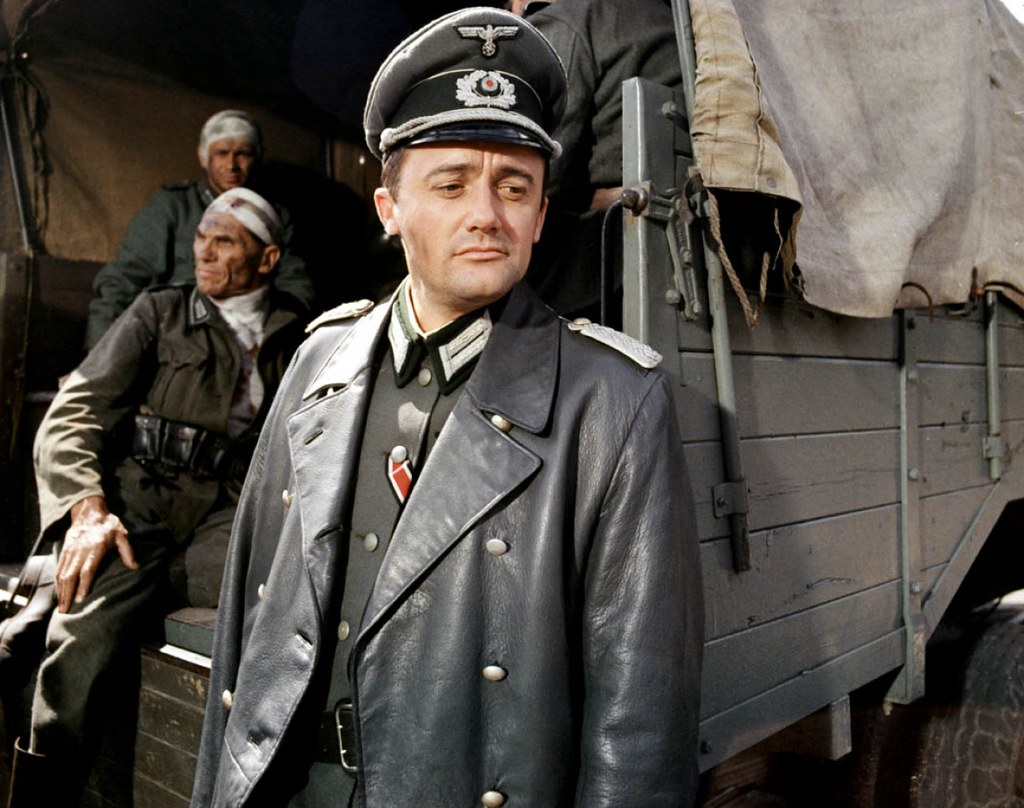
Robert Vaughn in "Remagen" movie
The World War II movies of my childhood now make me wonder: Why not some body armor? We see movies about contemporary troops who are loaded with this stuff. In many instances the troops get injured instead of killed. Protecting life is essential. But it's so sad seeing the ravages of war visited on these young men and women.
How about no Iraq war at all? We cannot turn the clock back. We are living with consequences of our incursions in a mysterious and bloody part of the world. In the 1940s it was Europe. We sent waves of vulnerable young men into battle. The toll was beyond what anyone could comprehend.
We have reached emotional distance now. The pain and death of that earlier time are easier to view in the abstract now. It exists on the pages of books. And, in movies that can project an array of messages, many of them not exactly jingoistic. Movies about war can definitely be anti-war.
In 1969 the USA was a cauldron of discontent about Viet Nam. It is amazing the government could escalate that miserable conflict. It is amazing our leaders could recite any lines giving a hint of justification for it.
"The Bridge at Remagen" is a WWII movie that came out in 1969. It is in that setting of the so-called "good war" that its creators projected the anti-war meme.
Much of the war skepticism of the '60s had to be voiced in subtle ways. Some of the "Star Trek" episodes had that subtlety. Musicians weaved their pacifist message in myriad ways. "All you need is love," indeed.
"The Bridge at Remagen" is a story taking place in the closing stages of WWII. At this point the outcome is obvious - a panel at movie's start tells us the German military is in full retreat. Those poor "grunts" on the American side had to plunge forward.
We see a big unit at movie's start racing toward a bridge, a bridge the Germans are ready to destroy. (This is not Remagen.) I'm struck by how fast the tanks can travel. The movie's creators seemed to have a special fascination with tanks.
The Germans didn't want the bridge to become useful for the Allies to enter Germany. But they had to weigh this against the need to try to get retreating soldiers back into Germany.
Robert Vaughn plays a German commander with compassionate impulses. We stereotype those Germans as satanic. It was the notorious SS that really earned the satanic description. The very purpose of the SS was to fan out and get German officers in line, even if it meant executing some. Vaughn's "Commander Kruger" character meets this fate at the end.
Kruger sees the futility of the German war stance all the way from the start. He is ticked off and cynical. He tries to be "the good soldier" to an extent. He's even willing to shoot and kill a couple men trying to desert, men from the pathetic little assemblage of "troops" he has at the end - old men etc. A fellow officer asks him, ponderously, "why?"
Kruger is the classic conflicted character. He is the loyal officer to a degree. But he has made the decision, following his compassionate nature, to delay blowing up the bridge over the Rhine. In this he contradicts orders from above. He wants the tattered 15th Army to be evacuated from the west side of the Rhine.
The SS types are uncaring about this. They are of course irrational. Losing troops is attrition that can only add to the spiral of defeat.
We see this curious streak of irrationality attached to the Germans in many WWII movies. In the old movie about the sinking of the great battleship "Bismarck," we hear a British commander saying "the Germans have to prove their superiority every single day, and that is their one great weakness."
The movie about the Remagen bridge, highly fictionalized, shows anger and cynicism all around. We see military men giving "lip" to superior officers. Vaughn as Kruger tries telling a unit that "reinforcements are coming." The leader of that unit says "we have heard much about reinforcements. The men don't believe it anymore."
Kruger keeps pleading for "Panzers" (tanks). This is a refrain in WWII movies: Germans wanting those Panzers to show up.
"The Bridge at Remagen" was shot on location in Czechoslovakia. The Cold War was a cloud hanging over us all. During the filming in 1968, the Soviets invaded Czechoslovakia to reinstate a hard-line Communist government. The film's cast and crew were forced to flee to the west in taxis.
Vaughn's autobiography, "A Fortunate Life," has a chapter devoted to the adventures of making that movie. Hollywood seemed more willing to fictionalize real-life events in those days.
 
Remagen was real flashpoint
The Remagen bridge was a real and violent episode in the closing stages of WWII. But the movie veered off from the facts of the battle, so as to present a captivating story or maybe nudge in more of a message. The conflict itself presents a message on the sheer tragedy of war, its reflection of man's curious tendency to self-destruct. It can be argued that the U.S. Civil War was the epitome of this.
Such massive and mystifying conflicts roared into the 20th Century, eliminating life as if a scythe and rendering the dead mere statistics, because the sheer volume just seemed to dehumanize everyone.
We see many men die or get serious injuries in the "Remagen" movie. We don't see blood. We can imagine the gruesome aspects of the conflict. "Saving Private Ryan" would relieve us of having to imagine it.
"The Bridge at Remagen" was current when our rage over Viet Nam was most intense. The movie sent a message about the dismal specter of war, a message that could easily be translated to the Viet Nam era. The men fight in futile fashion. The futility seems ingrained in them by that stage of the war. What could possibly be accomplished here? Germany was collapsing. Level-headed men would have recognized that.
Germany's top leaders, I'm sure, realized they had no choice but to keep fighting. Stand down? Had Hitler and his associates done this, the world's leaders simply would have come at them, to seize them for their aggressive, invasive actions and of course persecution of Jews.
The SS men were dispatched to keep at least a modicum of war footing. It was insane and Vaughn's character realized this. As a career military man his options were limited. He is given orders based on information that is ridiculously incorrect. He is told he has military assets at his disposal - they were quite phantom. He shares his frustration with "General Von Brock" who is a friend and confidante.
The two decide in the movie's opening scenes to delay blowing up the Remagen bridge. This is of course insubordination. But who wanted to give carte blanche authority to the crazed inner circle of German leaders?
The most zealous Nazis seemed almost uncaring about the lives of their own men. We see this in "Sink the Bismarck!" too, where the ship's top commander wanted to send divers to examine damage even though it'd be highly risky for them. The second-in-command is like Vaughn's "Kruger," having some semblance of human compassion. He also had sound judgment, realizing that the ship really ought to return for repairs. The vanity of his superior prevented that.
The ship got surrounded by British vessels at the end, and is rendered flaming wreckage, sent to the depths. The ship was dealt its mortal blow by a torpedo dropped by a WWI vintage plane.
The British prevailed but only after a catastrophic loss of life as a result of the Bismarck prowling out there. Such was the nature of the major wars of the 20th Century: casualties ending up as mere statistics, such was the massive scope of conflict. The world needed some female leaders. Females would condone none of this.
A footnote on the "Bismarck" movie: Kenneth More was a wonderful actor. I'm struck by how, at the end, he asks his female subordinate out to dinner and she simply says "yes" - no cloying moves. The movie was shot in black and white even though it came out in 1960.
 
Meet the grunts at "Remagen"
George Segal was at the height of his acting career in "The Bridge at Remagen." He plays the heroic but hard-edged "Lieutenant Hartman." He is highly bitter and cynical at times. War weariness is his essence. He gets orders to advance to the river.
"Major Barnes" is a vain character who in one moment is consumed by ambition, but in another is genuinely compassionate. Bradford Dillman plays "Major Barnes."
"Hartman" is supposed to advance until encountering resistance. The U.S. 9th Armored Division approaches Remagen and finds the Ludendorff Bridge intact. Barnes looks stunned when his superior, "General Shinner" (E.G. Marshall) says the bridge should be taken, not destroyed. This would be done under heavy resistance.
Ben Gazzara plays "Sergeant Angelo" who actually strikes Barnes at the time the order is communicated to the unit. Called "Angel," the sergeant is a close buddy of the Segal character. Segal's Hartman is exasperated and hesitant upon getting the order. Segal repeatedly shows this attitude through the movie, but in the end he always follows orders.
The Germans try to blow the bridge at the last minute, but their explosives (mere "industrial" explosives) are too weak. The Americans are ready to send tanks across. Kruger can no longer motivate his people so he flees back to headquarters to seek direction. The SS has taken over there. Kruger is judged to have screwed up. His fate: death by firing squad.
We hear a German saying in a defeated vein: "A dying animal begins to bite at its own wounds."
Toward the end of the movie, the "rat-tat-tatting" of machine gun fire gets to be a bit too much for me. This feeling sets in when Hartman leads a raid on a gun nest on a barge moored to the bridge. It's too easy for the Americans to sneak up to the barge in a small boat in the darkness of night. The Germans couldn't have been so stupid as to not be aware of this threat. A grenade or two do the job on the Germans, almost - a wounded German points his gun and appears to dispatch the Gazzara character.
This is the last straw for Hartman who now seems maniacally disgusted and almost suicidal. "Sergeant Angelo" had fallen into the river, pleading Hartman's name. But is he dead?
The despondent Hartman, back on land, decides to march toward the German position. Bullets glance off the ground near him. His comrades supply "cover fire." He finally confronts the rag-tag German defenders of the bridge who now want to surrender. They do so through Hartman.
The meeting is promptly surrounded by a squad of M24 Chaffee light tanks, their headlights causing Hartman to squint. In the aftermath, Hartman discovers his buddy Sgt. Angelo survived! The ecstasy is almost indescribable.
Hartman has seen so much death. He has no control over these circumstances. He is a victim of a war-obsessed time. Now he can celebrate the fact that at least one of his comrades, "Angel," plucked life out of the apparent throes of death. There is hope after all.
More hope was needed to try to get the U.S. troops extricated from Viet Nam - a hellhole of futility. We see the futility of the Remagen encounter spelled out at the end. A panel at movie's end informs us that the battered bridge only stayed up for ten days.
"The Bridge at Remagen" is fundamentally an angry movie, with this quality exuded by everyone. The message was clear in 1969: war reflects the worst impulses in us. The U.S. left Viet Nam in a painstakingly slow way. It was Lyndon Johnson's war but Richard Nixon didn't seem all too eager to end it. Were there larger forces at work? Larger than the U.S. president? The military industrial complex?
President Eisenhower had warned us about this. The irony is that he was the lionized war leader in "the good war" of WWII, yet he more than anyone realized that war is nothing but bad. He sought to trim the military, and he gave us that warning about the "military industrial complex." A man with experience in the bloodiest theater of war can be expected to project such wisdom. Ah, much more than a "chickenhawk" like Dick Cheney (with multiple deferments).
"The Bridge at Remagen" is a 1960s version of "Saving Private Ryan," made in a time when Hollywood backed off from the most gruesome images of war. Nevertheless we see the tragic scale of WWII, the so-called "good war." We see that war in too much of the abstract now. We are too easily entertained by movies.
- Brian Williams - morris mn minnesota - bwilly73@yahoo.com

Thursday, July 10, 2014

"Party like it's 1898" in Morris, Minnesota

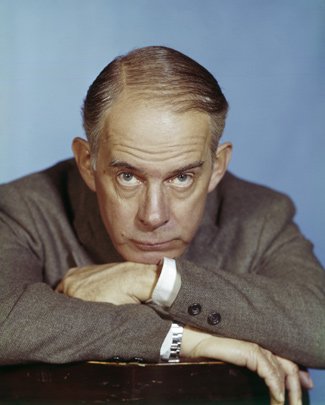
Harry Morgan
Morris in 1898 was the kind of town we saw in "The Shootist," John Wayne's last movie. He acted in an especially endearing way. His character was dying. His character was the type who might have shown up on the Wadsworth Trail. The trail was chapter 1 in our community's history.
"The Shootist" was a turn of the century western. There was nothing like Y2K hanging over our heads. We were dealing with a different type of technological phenomenon. Cars were getting born! Wayne pauses to look at one of these curiosities as he enters a saloon for the climactic scene. His pause to look is symbolic. He is struck by the changing times. He knows that his own rough-hewn era is being phased out. He has been reminded of this through the movie by the Harry Morgan character.
Morgan seems both perturbed and fascinated by the presence of the "old gunfighter" name of "J.B.Books" (Wayne).
Books is in town for his final days. He has a terminal illness. He consults with the doctor played by Jimmy Stewart. Ron Howard plays a teenage boy. Books has a strong sense of morality carved out as best he could in the raw, uncivilized West. Civilization caught up to him. He was a gunfighter to the end. He subscribed to the Golden Rule. He was a pillar of self-reliance.
The "horseless carriage" was a sign that the world around him was changing dramatically. He dealt with his adversaries at the end in the manner he had always known, guns blazing. One of his adversaries had to be let out of jail first. Morgan played the sheriff who could see what was coming.
Wayne had warned the young Howard about how "the guy who gets you" comes as a complete surprise. It's prescient. In the end, "J.B. Books," in his death throes from cancer, meets his end and is spared further pain from his health affliction. He is shot from behind by the saloonkeeper who has escaped his attention.
Howard retrieves Wayne's gun and dispatches the saloonkeeper who is trying to reload his double-barrel shotgun. Howard throws the pistol across the room, causing the dying Wayne to smile. Is Wayne smiling because he's pleased that Howard will eschew the primitive problem-solving means of shooting? That's the thought I was left with.
Could such a scene have played out here in Morris? Our community was quite the fledgling, fascinating place at the turn of the century. Morris was officially christened in 1871. Many of the original settlers had to have been still around in 1898.
What happened in 1898? It was a celebration that would take no back seat to our present-day Prairie Pioneer Days. The finale was fireworks. Close your eyes and try to visualize, as if you're imagining the kind of scene that springs off the pages of a Louis L'Amour novel.
Morris was born thanks to the railroad. The Great Northern depot was in the block between 5th and 6th Streets. It was the only building in the immediate vicinity. The block presented a large open space, in which was erected a high platform. People swarmed to view the fireworks extravaganza which would be set off. They crowded along the wooden sidewalk in front of the businesses on the other side of the street.
Party like it's 1898? Most definitely. Viewers sat in wagons and "top buggies" on the fringes. Safety was respected.
There had to be "oohs and aahs" as the show unfolded with a flight of rockets "swishing their way in a graceful curve into the evening sky." The description is from Morris' Diamond Jubilee publication (1947). I know our Morris Public Library is in possession of this publication. Melissa Yauk showed it to me once, and now I'm concerned about whether this and other precious items survived the water disaster at the library.
Those rockets "burst into a shower of multi-colored stars" as the assemblage reacted most approvingly. The script was going fine up to this point. But remember the year was 1898 when surely there were few regulations, certification or any of the other guarantees that would prevent a calamity today.
The crowd definitely got their spectacular show. But the show abruptly went off-script. Should we be surprised? I'm reminded of that scene where "Rambo" just happens to find an outdoors store so conveniently loaded with explosives for his purposes. Boom!
  
Things go awry in 1898
The second wave of rockets were not deployed as planned. They shot straight out from the platform. They were prematurely lit on the floor of the platform by the backfire of the initial rockets. A box of Roman candles joined in with the inadvertent exploding.
From the Jubilee publication:
  
Big pin-wheels began to turn. The giant crackers boomed. For a few seconds, the crowd thought it grand, but men were jumping down and rolling from the platform and running. The sparks and balls of fire beat them to the loaded wagon, and the greatest pyrotechnic display in the history of Morris erupted from that wagon with a mighty roar like the bursting of a volcano.
The huge assemblage of men, women and children, horses and dogs vanished from the open spaces in nothing flat, refugees being taken in stores or hallways, bars or saloons, without any regard to preconceived proprieties or prejudices, and without distinction as to age or sex. Like awakening from a horrid dream, many people could not figure out where they were or how they got there.
As the crowd cautiously began to return and to take stock, there were a few desultory shots but that was all. Conversation resumed in crescendo, no one had been seriously burned or hurt, and Morris had seen its greatest celebration in history.
  
"Hitching posts" part of the picture
You can imagine John Wayne in his western outfit somewhere on the periphery. He'd sidle up to a "hitching post." Such posts truly abounded around our community in the late 19th Century.
There were different kinds. Some were wooden posts with rounded tops, others were railings fastened to a series of posts, and some were rings fastened to the edge of the sidewalks.
Cement posts were standard in the residence portion of town, along with the cement or stone curb blocks for the convenience of persons alighting from buggies. Some residences had posts with iron horse heads.
Delivery wagons generally carried their own hitching weights which were thrown on the ground at each stop, in order to save the time necessary to tie and untie the horses at each stop.
All this got phased out, just as the ice business would meet its inevitable end over time, not overnight. The late Doug Rasmusson wrote about how these changes happen gradually.
The last of the public watering troughs was the one maintained by the city on 6th Street near the power plant. It was equipped with a steam pipe so that an occasional shot of steam could be turned on to keep the water from freezing during cold weather.
Indeed the world was such a different place from today. "J.B. Books" could have ridden into town. As a young man he may have been on the Wadsworth Trail which went north of Morris, westward toward Fort Wadsworth (later to be called Fort Sisseton). Fort Wadsworth was named for a Civil War general. Gager's Station was the first viable manifestation of western civilization here.
In 1870 the railroad came along and really opened the door for the kind of development that Harry Morgan (as the sheriff character) would be so proud to trumpet. Morgan listed all the ways his western community was getting more civilized, and he bluntly described Books as being totally incongruous. He said right to the gunfighter's face: "When you're dead, what I'll do on your grave won't pass for flowers."
(This actually isn't Morgan's best line. When he lets that prisoner out to face Books at the saloon, he says "don't wet your pants.")
Morgan didn't seem like all that terrific an actor, but he sure could find work. The list of stars in "The Shootist" painted a picture with their talent of life in turn of the century America. There was nothing stopping our progress.
The great celebration of 1898 reflected brimming pioneer spirit that was a chapter in Morris becoming what it is today. Today we have Prairie Pioneer Days which many people actually think has lost some of its luster. Why? Maybe what we need is something totally unscripted like fireworks exploding all over the place.
The FFA used to construct a miniature alfalfa arch. What happened to that tradition? We'll just come and eat at Luther's Eatery again. Tell the city to remove all that cement or asphalt at the center of East Side Park. It reflects the heat of the sun. It's a bummer.
But the city has bigger fish to fry now like the disaster at our Morris Public Library. Come to think of it, that disaster is almost like the fireworks problem in 1898. So maybe we're not all that different today. We're still human and we court unscripted bumps in the road. See how "the roof fell in" at St. Mary's School. Sheesh. That's no less a disaster than the long-ago errant fireworks.
See you at Luther's Eatery. Let's see if PPD can keep its vitality.
- Brian Williams - morris mn minnesota - bwilly73@yahoo.com

Monday, July 7, 2014

How about songs, skits for Sesquicentennial?

Twig Webster
I had the pleasure of watching the movie "Waiting for Guffman" the other night. This movie came from the same creative crew that gave us "Best in Show" and "A Mighty Wind." They do warm-hearted parodies that make you appreciate the subject matter even more.
"Best in Show" paid homage to dog shows. The dogs came across as more level-headed than their owners! Really, a humorous treatment of this subject will make light more of the owners than the dogs.
"A Mighty Wind" paid homage to the flowering of folk music in the 1960s. Eugene Levy played a singer who "went solo" in his career and became increasingly eccentric, to where he appeared on an album cover in a straitjacket, an album entitled "A Cry for Help." The '60s were like that.
The best parodies respect their subject matter. OK, so let's shed light on this "Guffman" production, which makes us all think about that community theater group which had such a wonderful run in Morris. Too bad it has gone into mothballs. Certainly there's still lots of talent among our citizenry.
Watching "Waiting for Guffman" makes me think of an ideal proposed project for Morris. How about an original musical production honoring Morris for our Sesquicentennial? Our what? Get used to the word, its spelling and pronunciation. Del Sarlette says "Sasquatch-tennial" in mock recognition.
The magic year is coming up in 2021. Really that's not far off. Think of the creative stuff that could be penned based on Morris history. Imagine a lively musical production with skits and locally tailored songs, all presented over a series of 2-3 nights at our public school concert hall.
I suppose someone would have to get paid. How about someone like Twig Webster and his wife Shaune, wherever they are now? They live and breathe theater. Twig is a Morrissite to the core, in spirit I'm sure.
Maybe someone could prepare one of those "grant applications." That's a world that exists outside my sphere. Money seems to just appear magically. Can't beat that! Maybe one of our local "grant masters" could concoct something. The creative juices could flow.
Research for the production could be done from the souvenir publications for the Diamond Jubilee (in 1947) and the 125th anniversary (in 1996). I know, the Diamond thing should have been done in 1946, not 1947. The Diamond Jubilee publication makes note of that without giving a reason. I suspect the adjustment following World War II was a preoccupation for many in the community. We held off 'til 1947, at which time a quite fine celebration was held.
I do not recall a souvenir booklet for the Morris Centennial in 1971. I find that strange. Couldn't Ron Lindquist at the paper get his butt in gear and sell the ads?
The 1970s weren't the most idealistic decade in U.S. history. War weariness from Viet Nam cast a pall. I remember that at the time of the U.S. Bicentennial, in 1976, a cynical mindset seemed to prevail - kind of defeatist, not at all what it would be today. Today there would be an eruption of patriotism.
In the 1970s we had economic inflation and eventually "stagflation." We can forget today the kind of dragging-down of our collective attitudes. I was in college and got a heavy dose. I got a heavy dose of what might be called "deconstructionist" thinking. It penetrated into architecture. That's how we got the UMM science auditorium with its disregard for 90-degree angles. We couldn't do things the standard way. That's how we got into Viet Nam, right?
  
History and characters, onstage
It's fun to read about vignettes from history and try to imagine how they might be represented in skits and songs. In the "Guffman" movie, the narrator is a pioneer seated at his campfire. Our local production might show someone at his campfire along the Wadsworth Trail. The trail was the epitome of the pioneer spirit and ideals, the risk-taking and adventuresome instinct of those 19th Century folks.
The fellow in the movie was heating up some baked beans. If you remember "Blazing Saddles," you'll smile.
The Wadsworth Trail was chapter 1 in civilization coming here. I have always heard there were no permanent Indian settlements here. Del and I found it amusing that the Centennial program in 1971, held at the fairgrounds, began with acknowledgment of the Indians. The P.A. person said something like "no, we were not the first here." Well, I think "we" actually were.
The program in 1971 was organized by an outside consultant. Morris legend has it this outfit, headed by someone whose last name was Horner, had a stock script that was taken town to town. A wave of Centennials was obviously happening at that time.
I have a friend in Cedar Rapids IA where the Sesquicentennial was marked quite some time ago. So, I got used to the term. I remember being on the phone with the Cedar Rapids Chamber of Commerce where the person complimented me on being able to pronounce "Sesquicentennial" so smoothly! I considered making a trip but did not.
I also have a female acquaintance in neighboring Marion IA who plays in the Eastern Iowa Brass Band. That band is quite the operation, more formal and intense with its business than our Morris Community Band. Google it.
A brass band like the Iowa group would be absolutely perfect for our bandshell at East Side Park. First the city needs to rip up that cement or asphalt at the park. That surface reflects the sun and gets uncomfortably hot. It's always very discouraging to see so many onlookers at the park way off to the side, looking for shade in their lawn chairs.
I remember when Governor Al Quie was here and everyone retreated off to the periphery. I chatted with our Chamber of Commerce executive, a chap last name of Beckman, who said "I was very embarrassed." I tried using that quote in the Morris newspaper but it got scrubbed. Too negative.
The paper today is providing such superficial coverage of that thing involving the high school principal. I have never seen so many carefully massaged quotes. We are left with nagging questions that don't get answered in the paper. I wonder if Twig and Shaune could put together a skit about the notorious episode? No, I don't think they would be so inclined. "Look, the bowling alley is closed!"
"Waiting for Guffman" would have no inhibitions. Fred Willard might play the role of the principal. Seems to me Fred got in trouble for some notorious episode of his own in his private life.
I have felt since day 1 that there's no way the high school principal will work another day here. If I'm wrong I'll stand corrected, but I think the community will demand that our school leaders set an example with their personal lives. Go to bed by 9:30 p.m. Go to church on Sunday. That's just how I look at it. I suppose if I were so smart, I'd still be with the paper.
  
Grant $ for creativity, history?
Let's see if the "grant people," the people well-versed on getting that magical money from the pipeline, can get something going for our Sesquicentennial celebration in 2021. After all, these gnome-ish folks were able to get underwriting for that "green community" blueprint, right? The "green community" was planned for the old school property. The blueprint won an award. We are learning there's a big difference between a blueprint and reality. William F. Buckley once wrote a book entitled "Did you ever see a dream walking?"
I'd like to see that Sesquicentennial program become total reality. Whether the baked beans might become meaningful, we'll see.
BTW Twig Webster is a 1971 Morris High School graduate. So is Del. That class recently lost Eddy Manska.
- Brian Williams - morris mn minnesota - bwilly73@yahoo.com

Thursday, July 3, 2014

Stahman's timely base hit boosts Post 29

Ethan Stahman delivered the key blow in the Morris Legion team's narrow win over West Central Area. The site was Kensington. Stahman sent a single into right-center in the fifth frame. Noah Grove and Sean Amundson were off to the races to score.
Morris now led 3-1 and went on to prevail in the 3-2 final.
Riley Biesterfeld on the hill was pleased to get that lead. Biesterfeld pitched the whole way in this Monday (6/30) contest. He fanned six batters in his seven innings. One of the two runs he allowed was unearned. He gave up five hits and walked three in this workmanlike effort.
Riley out-dueled Gideon Morrow of West Central Area. Both hurlers worked the full seven innings. Morrow gave up four hits and three runs (two earned) while fanning three batters and walking one.
Four Morris batters each had one hit. Bryce Jergenson scored a run while going one-for-four. Sean Amundson likewise crossed home plate, and this Post 29 athlete went one-for-two. Nick Solvie had a one-for-three line, and Stahman had those two timely RBIs to go with his one-for-three stats.
Morris fielded cleanly with just one error. West Central Area had two fielding miscues.
Each team scored a run in the first inning. Stahman drove in those two runs in the fifth, an inning in which West Central Area scored its second run.
Jordan Beuckens stood out with the stick for WC Area, going two-for-three.
  
A defeat
The Thursday, June 26, action wasn't so favorable for the Morris Legion nine. The scoreboard outcome was 5-1 with Morris having the lower total. Osakis plated the five runs. The town is named for an Indian chief of long ago.
Morris batters were frustrated facing the high-quality hurling of Jordan Frederick. Bryce Jergenson managed the only hit off Frederick. Bryce doubled and drove in the lone Morris run. Frederick walked just two batters.
Jergenson pitched five innings for Motown and Riley Biesterfeld pitched one. Bryce took some lumps as he gave up five hits and five runs, but one of the runs was unearned. He fanned four batters and walked two. Biesterfeld gave up no hits, walked none and fanned one.
Hey, Frederick is pretty good with the bat too! The Osakis standout had two hits in as many at-bats including a double. He drove in two runs.
Osakis attacked to score two runs in the first inning, and scored their other three in the fourth. Morris scored its run in the fifth. Each team committed one error.
  
All hail soccer!
It almost seems like a media conspiracy: all this attention devoted to world soccer of late. Memo to you younger folks: Every few years we get this meme that soccer has finally arrived in America. It never seems to stick, though.
Remember that in the 1970s, soccer exploded in popularity in Minnesota with the Minnesota Kicks professional team playing at Metropolitan Stadium, Bloomington. Freddie Goodwin was coach. The Kicks took off with faddish popularity. Actually the wave lasted longer than a mere fad.
But as I said, soccer never seems to stick. The Kicks couldn't make the transition from the beautiful, pastoral setting of Met Stadium to the basement-like atmosphere of the Metrodome. The Kicks are merely the fodder for nostalgia now.
What kind of organized soccer exists in Morris, if any? I remember a time when some rather robust youth programs were going. We saw games on that expansive old playground east of the defunct East Elementary School.
There's an area to the south of the present-day Morris Area High School that would be quite fine for soccer.
It's especially important that boys have the option of playing soccer. That's because they need an attractive option to football. Football gets worse media scrutiny all the time with the nonstop revelations about semi-crippled former players, or fully crippled. A herculean effort will be needed to try to get this nation to go into "withdrawal" from football. Progress will have to be done with baby steps. I do see it coming, though.
Let's get some enthusiasm revved up for organized youth soccer here in Motown! The girls have it good with volleyball, a healthy and entertaining sport all around. Boys, quit bashing your heads in. Cross country? Those little guys will keep going like the Energizer Bunny.
All hail soccer in 2014! Get going out on that "pitch."
- Brian Williams - morris mn minnesota - bwilly73@yahoo.com